
Anxiety from six months ago relived:
Refreshing the booking page every minute for a week prior to the release; Constantly checking with the cinemas regarding the release the showtimes; Reserving that J-row middle seat before it gets taken; Every other conversation at home that’s not about this movie becoming secondary; Wanting to be on time for the movie, even when it’s etched in stone that I would be there at the theatre an hour before the show, killing anyone standing in the way; Breathing out with a heavy sigh of relief only after I am seated before the screen.
This anxiety hasn’t somehow left this time even after watching the movie, with so much to process.
Madras Talkies presents Ponniyin Selvan – 2:
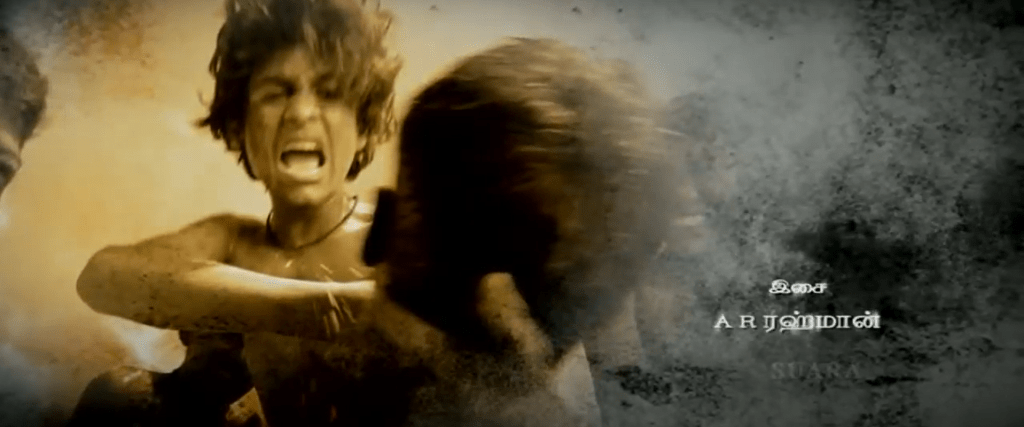
Zoning into this movie was like entering a focused state in a temple when they ring the giant bell on the premises. That was the effect it had on me when I heard the background score, the feeble dong sounds, as the Lyca Productions logo appeared on the screen. Madras Talkies card came up with a thunderous sound followed by silence, slowly tuning into Aazhi Mazhai Kanna. I am a sucker for cold openings, and especially the ones by Maniratnam give me goosebumps. Being familiar with his style, I had a particular expectation of when and for which song the Madras Talkies card would appear, but every time his movies surprise me. When I was expecting the Chola theme music from Ponniyin Selvan – 1, which we went berserk over during every rewatch, Ponniyin Selvan – 2 had something else in store. It felt like I was in a different movie. Three songs played one after the other, with the title credits spilling from one to the next, for the young Aditya Karikalan and Nandhini, completely taking me by surprise. And then… the actual title card appears. It was the best prologue we could have gotten. It established the grimness that was going to prevail for the next two hours.
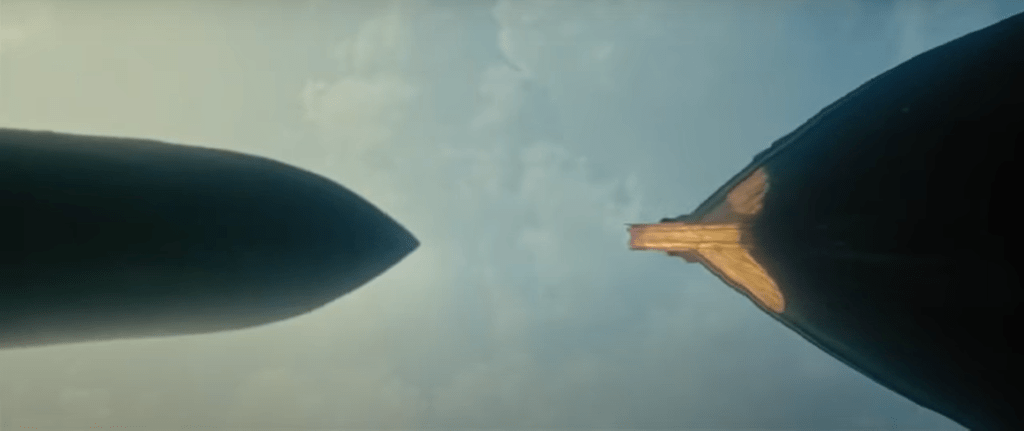
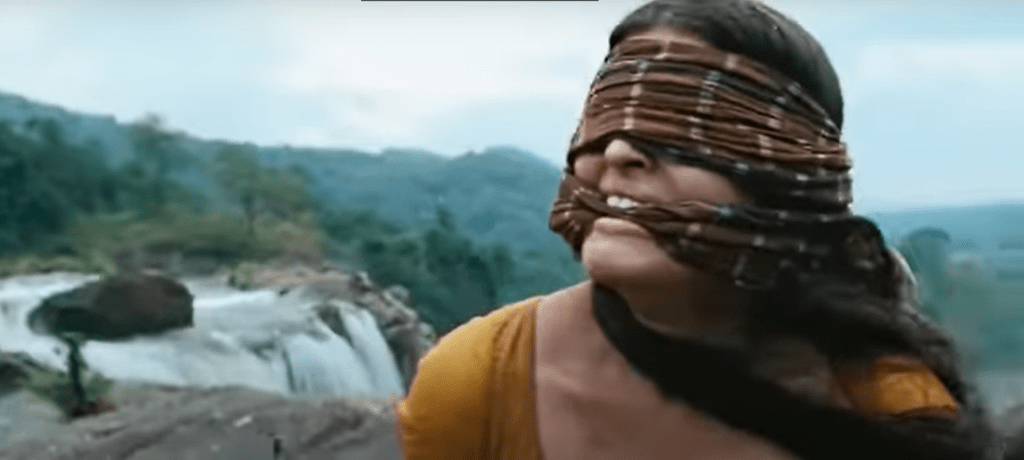
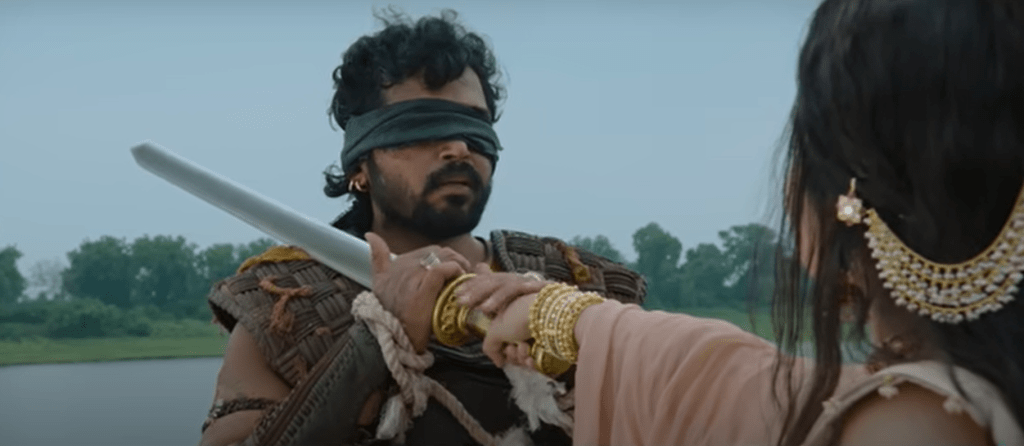
As I had mentioned in my thoughts about Ponniyin Selvan 1 experience — here, the point that seems to get stronger and stronger is how every Mani Ratnam movie so far has been a journey to this dream project of his. Boats colliding with each other; Blindfolded characters in distress screaming and whispering; The world (camera) orbiting around the characters that are tied up in an intense conversation or sharing intimacy.

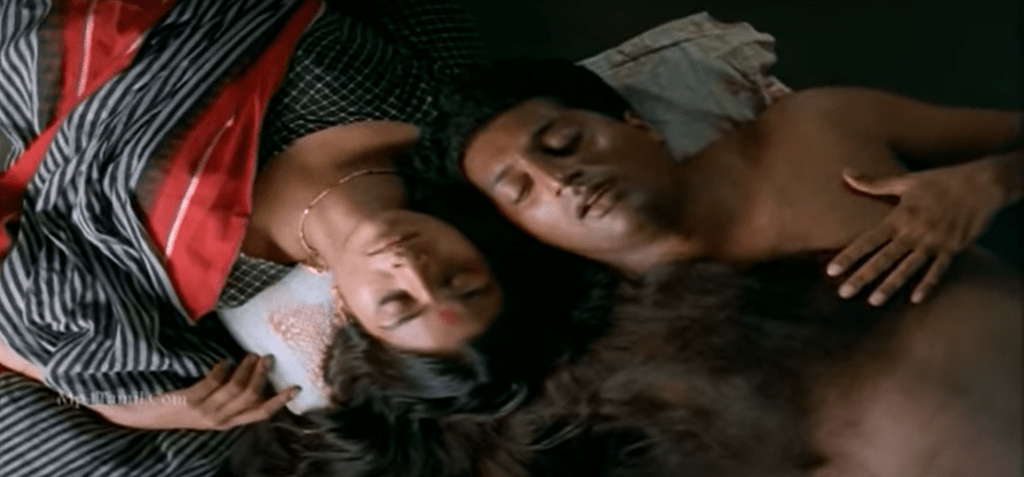
Coming to the second part, it was quite a task as a receiver to balance the needs of the book fan in me and the movie viewer. The deviations from the book were shocking as much as they were smart for the adaptation in finding a fitting end. Just as the movie itself, it was neat apart from some issues like the rushed-up writing when Vanthiyadhevan is brought to the court; Parthibendran Pallavan’s arc after Karikalan’s death; the lost pages (I guess edited out) on how Kandamaran blames Vanthiyadevan for Karikalan’s death. Some of the writing issues in the latter half couldn’t get masked entirely, because of the shorter scene structure. And the ‘Aga Naga’ scene in the first part is for ages. Here, it was good enough for me that Kundhavai identified Vandhiyathevan in that crowd to count as a reunion.
The movie played out a bit better during my second watch. Not all the transitions felt rushed as they did during the first watch. There are minute crumbs left for a Parthibendran – Vanthiyadevan face-off in the first part itself — as Vallavarayan mentions Oru naal Vaalin Koormayaiyum Paarthuvittal Pogiradhu! to Pallavan when they meet in Sri Lanka.
Although the Poonguzhali fan in me warrants a spin-off, I was like, did they just subtly establish her character with a single dialogue like no one would notice, when she was talking to Senthan Amuthan?
I was smiling at the staging of a scene where a group of priests passes between two characters (Kundhavai and Sembian Mahadevi) while revelations and emotions associated with someone’s birth are on display. It reminded me of the scene in Thalapathi where Surya looks at his mother in the temple from a distance with a swarm of people in between them. Ha ha! Maybe if they had gone with a similar ending to that of the book, there could have even been a Chinna Thayaval kind of moment.
Now coming to the biggest deviation from the book, it felt more like the undoing of the deviation that Kalki himself did — cutting off Senthan Amuthan’s arc and retaining the Mathuranthaka Chola in the movie as it is, who takes over the throne in the end. It was a smart move to achieve a fitting end for the adaptation. Although as a book fan, I kind of zoned out as everything happened so fast, the rewatch helped me understand the perspective better. I did gasp a bit when Sembian Maadevi came to the foreground around the final mark of Arul Mozhi Varman giving it up to Madhuranthakar, wondering if they were going to drop a huge bomb at that final moment. But thank god!

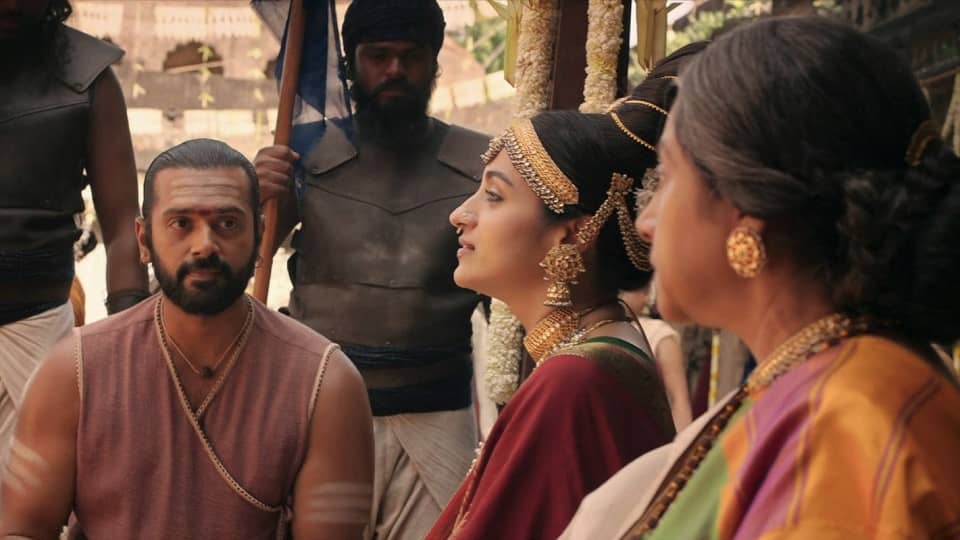
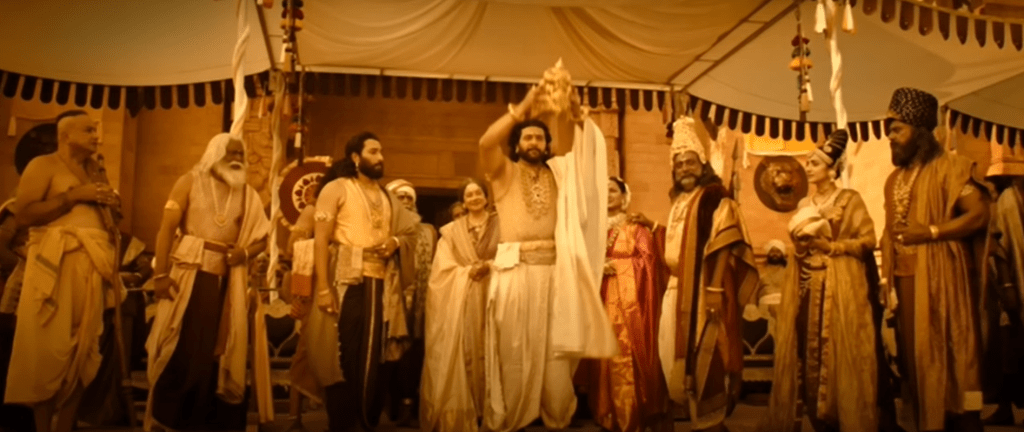
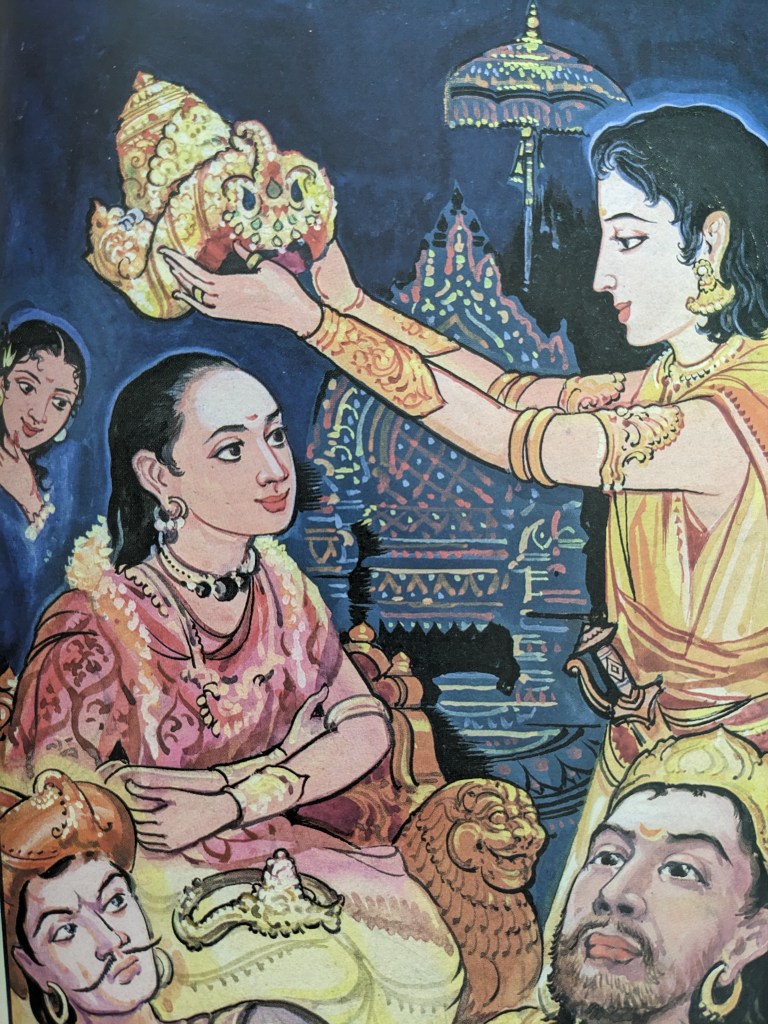
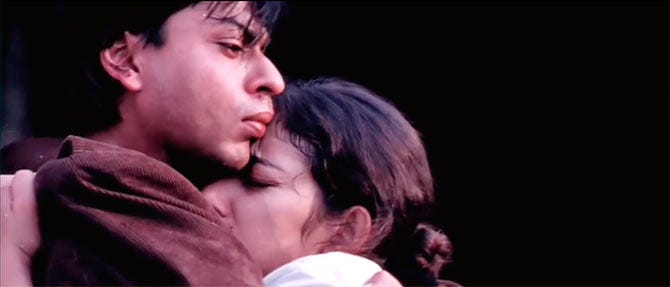
The entire sequence involving Aditya Karikalan’s death scene has been echoing inside me. The atmosphere, the ‘marumurai’ version of Chinnanjiru Nilave, the expressions of Nandhini and her loud cry, and the madness and vulnerability of Karikalan all amounted to a haunting experience. The camera angles are akin to Raavanan. As it builds up to THE moment, we hear the song playing in Sarangi that moves the bow up and down on our heartstrings. The build-up is like the climax of Dil Se.. played out in a Shakespearean mode. There is a grimness like that of Othello — If love could hug you tightly and kill you. Duniya ki sabse choti Prem Kahani. Even the Pandiya chants and the oath they take took me back to the oath the militant group takes in Dil Se. And the filmmaker owns it up by writing and staging this death scene in his signature style. Now we have a poetic version from the movie and a version filled with mystery, in a noir style from the book.
I wish that beautiful funeral scene played out a bit longer.
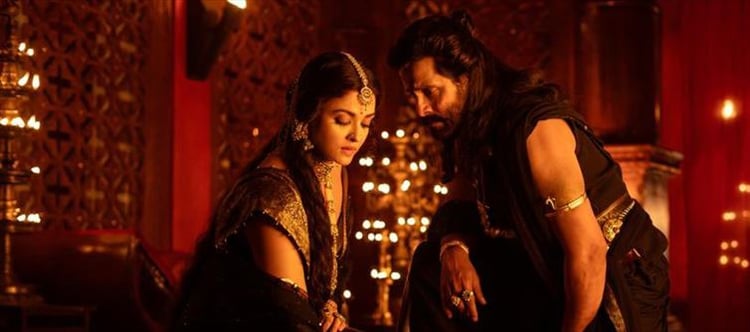


Another death scene that I quite liked was Mandakini’s. I was slightly dreading that it could end in a melodramatic way. But it was short and silent with the excellent Ilaiyor Soodar playing in the background.
The film was filled with close-up shots of every character and long silences that they all exchanged with each other. The body language of the characters have spoken volumes in establishing that they have understood good news or bad news from the characters who carry the message to them — For instance, it was a humorous and brilliant scene in how Kundhavai subtly shows that she has taken notice of Vanthiyadevan standing as a Kalamugan and his gestures would have already conveyed that Arulmozhi is alive. Another terrific scene is when Aditya Karikalan slaps Parthibendran understanding its bad news, and in another scene when he hugs and rejoices with Nambi understanding it’s good news and his brother is alive.
The performances are superlative. I want a Thiruvilayadal remake (lol) with Vikram essaying Sivaji Ganesan’s role. The eye expressions of his and those brows were sending arrows of emotions. With recent movies like Mahaan and Ponniyin Selvan, it is super evident that Tamil cinema is still not utilizing this actor well. Even if his character in Raavanan gets compared for similarity, the way he was made to push further in that territory as Karikalan is exceptional. Aishwarya Rai Bachan could just stay in Tamil and keep doing Mani Ratnam movies. I won’t have any complaints. Playing Nandhini has made the actor tap into different shades of the spectrum. I liked Trisha, especially during the scene where she gets to know about Mandakini and hears the story from Prakash Raj.
The ending war sequence is not something that worked so much for me. Or, I was not focusing too much on that sequence. I had to take a moment to absorb the changes that were made to Madhuranthakan’s character. But I liked how it came a full circle when a victorious Arulmozhi emerges from the mist like how Aditya Karikalan did during the starting of Ponniyin Selvan – 1 and both of them were fighting the Rashtrakoodas. After my rewatch, I was thinking about Thalapathi’s beautiful Sundari Kannal Oru Seithi. The soul of the song lies in the intimacy and the separation between the lovers, with the war in all its grandiosity still a backdrop. One can say that Ponniyin Selvan, especially the second part, pretty much pivots on personal moments and relationships, with the war and politics just going on around them. All that mattered is the poetry!
I was wondering about the creative liberty that Ravivarman got for this — the handheld camera approach in a lot of places. There are places where I felt the camera was walking along with the characters. That shakiness (without a trolley) which would normally be dismissed as a flaw is fully captialized. Similar to the first part, a bunch of Karikalan scenes look like they are from the point of view of a doped person — look when the young Karikalan is chasing Nandhini in the forest. The camera movement when Sundara Chozhan narrates the flashback about Mandakini is Ovovoru Manithuliyum in some intergalactic mode. It was a levitating experience catching it in IMAX.
Nandhini approaches Parthibendran at the start like how Ska from The Jungle Book would approach and slowly coil herself around Mowgli. That’s a mood. And the accompanying background score by A.R. Rahman has already wrapped itself around you to swallow you whole before you notice. I am hoping Rahman releases the proper version of the scores. I am still waiting for the music that plays during the Kadambur Maligai scene from the first part when the ministers meet up with Madhuranthakan. The Chola theme music in the second part also establishes the grimness. It plays out in a slightly subdued manner. That Soodanadhu Ratham variation during the pre-interval is coldness and vengeance getting squeezed out till the last drop.
With Mani Ratnam’s Ponniyin Selvan, there is certainly a takeaway for me with respect to book adaptations. That could perhaps make me go easy on adaptations like the Harry Potter series, for instance, which felt like it missed out on so many details and added things that would be good for a movie. In Ponniyin Selvan – 2, Nandhini’s character comes out of the water at the start when she gets introduced and she is seen going into the water when her character exits. The way her exit is handled in the book is different and beautiful in its own way. I feel this is cinematic liberty at its best without spoiling the core, especially for a visual filmmaker.
Looking forward to further rewatches.
 Cinema Paradesio