
Vendhu Thaninthadhu Kaadu was like watching Premam where the different phases of the protagonist are showcased through struggles and gangsters instead of romance and relationships. I wish even those tiny bits of romance were reduced further because of an ineffective heroine character and the weaker chemistry.
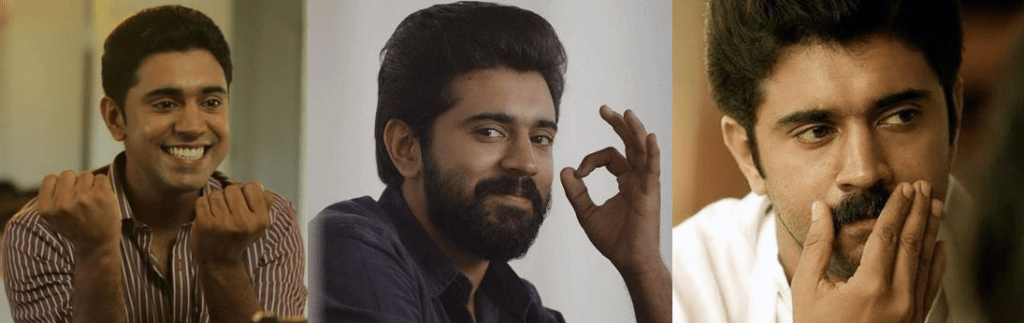
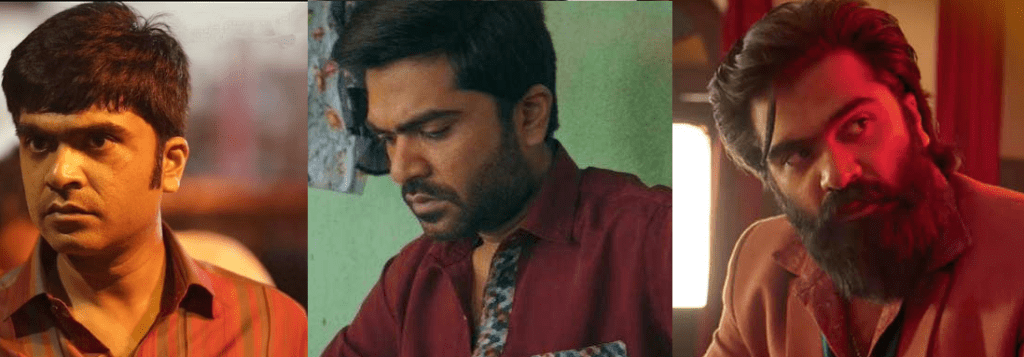
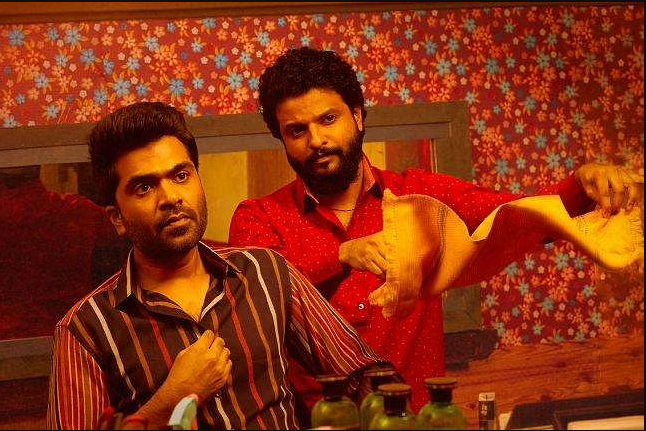
In fact, I was more satisfied with the equation between Muthu (Simbu’s character) and the Malayali Guy whom he befriends at Bombay station. There was subtle magic when these two characters kept meeting at various points in each other’s journey. I wouldn’t have minded even if that relationship had developed into something along the lines of Moothon. There is an excellent portrayal of how these two characters handle the life they are stuck in; the duality that keeps peeping out through these two.
Jeyamohan’s writing and Gautham Menon’s style of slow-paced scenes gives the feeling of reading a novel alongside witnessing a musical, especially with the way the songs are used. The usage of Marakkuma Nenjam is fantastic. I liked how the song has been distributed all along Muthu’s journey — running like a thread, a tune to his whole life. Nenjukulla nachcharikkum pattam poochikku thaena thandha enna aagum… is appropriate for Muthu’s every experience, be it when he moves out of his village; when he experiences love; when he reaches a certain level, etc. The lip-sync style in which Unna Nenachadhum and Kaalathukum Nee Venum (even though wasted on an ineffective romance track) are done interestingly — like Anne Hathaway singing I Dreamed a Dream in Les Miserables in a conversational style.
I loved the staging of the Mallipoo song. Wish it played out in the raw voice of the character on the phone, slowly fading into the actual version later — Similar to Wat Wat from Tamasha where we get the version of an auto driver singing the song and Mohit Chauhan’s voice coming in later, once the focus shifts to Ranbir’s character. Because here the character on the phone is rooted in a different sensibility. And she suddenly singing in Madhushri’s voice throws you off completely. It would have been even more interesting if the actual version of the song was reserved and used for Simbu’s love track.
A.R.Rahman’s background score was fantastic I was surprised how a serious scene was backed by something like the piano interludes from July Madham vandhaal. The Malayalam rap during the fight scenes was electrifying.
The action scenes are shot so well. The blurry style and the way the camera moves through the characters during the stunt sequences make it highly impactful — especially when I had my doubts about how fresh the action sequences are going to be presented anymore. The writing that is woven around a Gun was very interesting too — literally a Chekov’s Gun. The film also does a great job in establishing the anger trait that’s residing inside Muthu right from his introduction, who is otherwise a simple and passive person looking after someone’s forest land. And with his mom telling him what the astrologer said, it is very organic when Muthu takes up a gun or gets into action mode later.
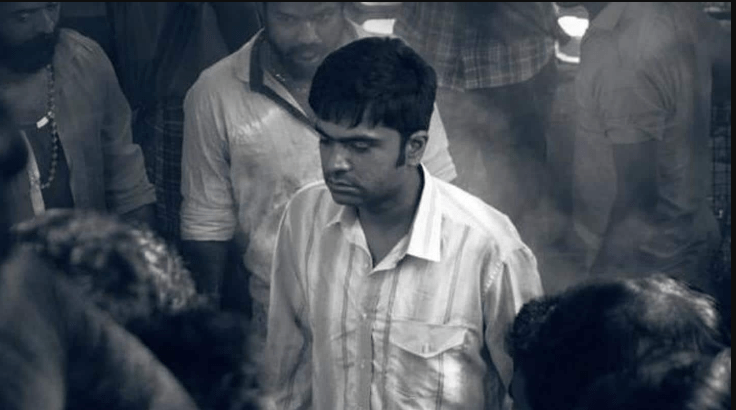
Coming to the performances — it is an understatement to say that I was bowled over by Simbu’s performance. In general, when we discuss characters in books / other movies and which actors play them, we throw in names based on the image an actor would have created within us. And we tend to not associate actors who have created this strong image with some of the characters. But this Simbu who played Muthu from Vendhu Thanindhadhu Kaadu, with his unassuming persona broke all that for me. It’s like an undoing of that image. The freshness that came out makes me revisit a lot of low-key and rooted characters that I’ve watched or read and reimagine them with him. Took me back to his Thotti Jaya days.

Well, this shouldn’t be surprising or one of a case when it comes to acting — it is not spectacularly new when we watch actors from Hollywood who can be both a larger-than-life star in one film and an almost invisible one in their next film. But sadly, we don’t get such a flip with mainstream “stars” in our cinema. Simbu’s body language, the way he walks, he dances everything was superb — as an audience, I could carry the memory of Muthu being stuck by so many thorns in the first scene, throughout. He was so convincing and delightful to observe in every phase of Muthu. Beautifully aligned with the writing of that character, watch out for the scene where he is made to put a gun on the man’s chest whom he is working for.
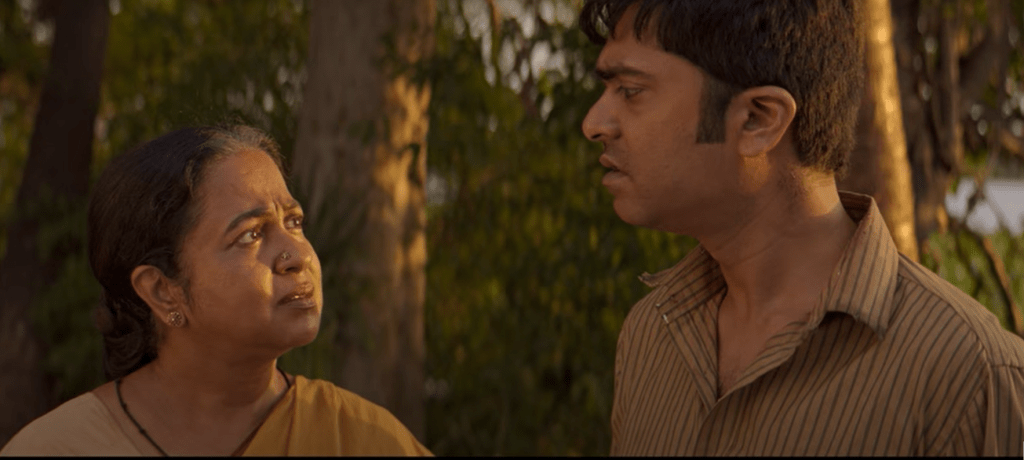
Another actor whom I could keep on watching was Radhika — even though her space is limited here, she just owns it whenever she is on screen. And as Gautham spends loads of time showing the internal processing and reactions of the characters, every minute expression received from such a powerful actor was a treat. I also liked the way Tulasi was portrayed. It was quite a breather to see her in such a role.
This movie with some of its peak cinematic moments had traits of becoming something of a world cinema – the quality of reading a book like Khaled Hosseini’s The Kite Runner. But the script refuses to take it there and it is intentional perhaps. It’s not the commercial aspects or the decision to keep it mainstream that comes in the way, but the decision to branch out in a different direction — something to give a particular kind of high to the audience. The movie didn’t want to be a 4 a.m. show-in-a-local-theatre material but becomes exactly becomes that in the last fifteen minutes. It made me dread what the sequel is going to be. For instance, the Nayakan easter egg even though gives you a kick was like a bubble reputation. Greedy decisions like that were tying the screenplay to one corner. Wanting to create its own universe, like the Lokesh Kanagaraj one, when instead it could have been a pure cinema material on the whole.
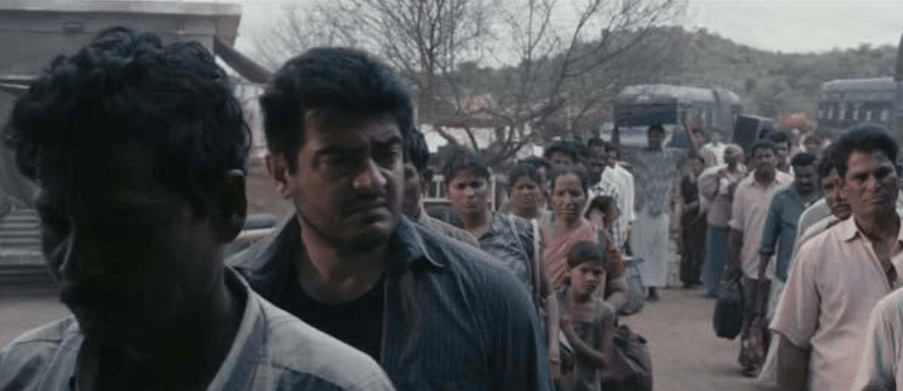
For me, Vendhu Thaninthadhu Kaadu was a better-made Billa 2 — a movie that tried to show the journey of a common man becoming a legendary gangster with an aesthetic sense. I hope there are more writer-director collaborations and more openness towards an adapted screenplay approach. The movie has at least those three good scenes.
 Cinema Paradesio